Last updated October 31, 2026
 Architectural shingles
 Metal roofing
 Tile roofing
 GAF
 Owens Corning
 Flat & low-slope
Free roof inspection with deck photos before we talk money - GAF and Owens Corning certified installation
Roof Repair Troubleshooting: Common Problems and How to Fix Them
A water stain on your ceiling can originate from a leak point 10 feet away, or even on a completely different roof plane, which is why patching the shingle directly above the stain fixes the problem only about 30% of the time. Water travels laterally along roof sheathing, rafters, and underlayment before gravity finally pulls it through a joint in the drywall. This guide teaches you to read a roof backwards, from interior evidence to exterior source, so you can narrow the problem before you spend a dollar on materials or labor. Homeowners in Norwalk know this dance well: a winter rain blows in off the coast, and by morning there’s a stain that wasn’t there the night before.
Quick Answer
Roof leaks and visible damage usually trace back to one of five failure points: flashing joints, pipe boots, valley seams, ridge caps, or worn shingle fields. The fastest way to diagnose the problem is to start in the attic and map the evidence, stains, drips, daylight, and damp spots, then work upward to find the exterior source. In Norwalk, where rain is seasonal and sun exposure is heavy, most leaks develop slowly over two to three years before a homeowner ever notices the interior damage.
Styles & brands we work with
Table of Contents
- Symptom-to-Source Mapping: What Interior Evidence Tells You
- Why Flashing Fails First: The Most Misdiagnosed Roof Problem
- The Three Roof Features Homeowners Inspect Last But Fail First
- Roofing Failure vs. HVAC Condensation vs. Wall Intrusion
- The Daylight-and-Moisture Attic Check: A Safe DIY Diagnostic
- Shingle Problems: Curling, Cracking, Granule Loss, and What They Mean
- How Norwalk’s Climate Patterns Shape Roof Repair Needs
- Repair or Replace: How to Know When Each Is the Right Scope
Symptom-to-Source Mapping: What Interior Evidence Tells You
The stain on your ceiling is a message. The color, shape, and behavior of interior water damage usually point to a specific category of roof failure, if you know how to read it. We’ve spent years in Norwalk attics and on roof decks tracing evidence back to its origin, and the mapping below reflects the patterns that show up over and over.
Here’s what each type of interior evidence typically means:
- Yellowish-brown stain with soft, irregular edges: Slow, chronic moisture intrusion. The water has been seeping in small amounts for months, drying and re-wetting with each rain. This usually points to a flashing joint or valley seam that leaks only during sustained rainfall, not a catastrophic shingle failure.
- Dark streak with a defined edge, like a watermark on paper: Water traveled along a rafter or truss and pooled at a single point. Follow the line of the streak with your eye; it points in the direction of the source, which is often several feet away.
- Active drip during or immediately after rain: A direct path from the roof surface to the interior. These are typically easier to trace because the water is still moving. Pipe boots and unsealed protrusions are the most common culprits in Norwalk homes built in the 1960s through 1980s.
- Stain that appears without rain: You may not have a roofing problem at all. See the section on HVAC condensation below.
- Sagging drywall or bubbling paint: The leak has created a reservoir. Water pooled inside the ceiling cavity until the drywall started to fail structurally. This is a later-stage symptom that requires opening the ceiling to address properly, not just patching the roof.
The lesson here matters: visible damage is downstream of the actual failure. A roofing professional who repairs only what you point at is treating a symptom. A proper diagnosis starts inside, maps the path, and confirms the source before any shingle or flashing is touched. For serious issues, our Roof Repair services begin with this same diagnostic approach.
Why Flashing Fails First: The Most Misdiagnosed Roof Problem
If you asked most homeowners what causes roof leaks, they’d say worn shingles. But in our experience across Norwalk, flashing failures account for more active leaks than shingle failures by a significant margin. Flashing is the metal material, typically aluminum, galvanized steel, or copper, that seals the transitions where shingles meet something else: chimneys, walls, dormers, skylights, and valleys. Shingles are designed to shed water on a continuous slope. Flashing is what protects the interruptions.
Flashing fails for three main reasons:
- Sealant breakdown: Most flashing is bedded in roofing cement or sealed with caulk. In Norwalk’s summer heat, those sealants dry out, crack, and lose adhesion within five to eight years, often before the shingles themselves show wear.
- Thermal movement: Metal expands and contracts with temperature swings. Over hundreds of cycles, the nails holding flashing in place can back out, or the metal can warp and pull away from the surface it was sealing.
- Improper original installation: If the flashing was lapped the wrong direction, water runs behind it instead of over it. This is common on homes that received quick, low-bid reroofs from contractors who weren’t roofing specialists.
You can identify flashing failure from inside the attic. Water entering through flashing typically travels down the underside of rafters, leaving dark staining on the wood framing rather than on the sheathing between rafters. If you notice dampness or discoloration concentrated along rafter lines near a chimney or wall junction, suspect flashing before shingles. This is exactly the kind of diagnosis a Roof Inspection in Norwalk is designed to confirm before any repair work begins.
The Three Roof Features Homeowners Inspect Last But Fail First
Homeowners see the big slope of shingles. That’s what roofs look like from the street. But the features that fail most often are the small ones, the ones you only notice if you’re looking for them. In Norwalk, where many homes are aging mid-century builds, these three components are consistently the first to go.
1. Pipe boots. Every plumbing vent pipe that pokes through your roof is sealed by a rubber boot that fits around the pipe. That rubber cooks in the Southern California sun. After six to eight years, it cracks, splits, or crumbles. By year ten, it’s actively leaking. A pipe boot costs a few dollars to replace and takes a professional fifteen minutes. We routinely see Norwalk roofs where the pipe boots failed years before the shingles showed any wear, and the homeowner spent months chasing stains before finding the cause.
2. Step flashing at dormers. Where a dormer wall meets the sloping roof, proper installation requires individual pieces of step flashing interleaved with each shingle course. This is detail work that takes time, and it’s the first thing a rushed crew does wrong. When step flashing is installed backward, missing, or sealed with caulk instead of properly lapped, water runs straight behind it. The leak often shows up on a ceiling far from the dormer because the water travels down the wall cavity before pooling.
3. Valley seams. Valleys, the V-shaped channels where two roof planes meet, concentrate more water flow than any other part of the roof. A valley that’s open, meaning the metal is exposed, relies on solid, correctly installed metal with proper overlap. A valley that’s closed, shingles woven across it, relies on the shingles themselves to stay intact through heavy rain. Either type fails faster under repeated water flow, especially if the roof is pitched at a shallow angle. Norwalk homes with lower-slope roofs see valley failures more often than steep-roofed homes because water lingers longer before draining.
If you’re checking your roof yourself, start with these three spots, not the field of shingles. That’s where the problems live first.
Roofing Failure vs. HVAC Condensation vs. Wall Intrusion
Before you call a roofer about a stain on your ceiling, rule out two other sources that mimic roof leaks. We’ve arrived at more than one Norwalk home for a Roof Repair in Norwalk only to find water coming from somewhere else entirely. Knowing the difference saves you a diagnostic call and gets the right trade on the problem.
HVAC condensation is the most common impostor. If your evaporator coil drain line is clogged, water backs up and overflows into the drip pan. If the drip pan is cracked or the secondary drain is clogged too, water runs into the attic insulation or down through the ceiling. The tell: an HVAC condensation stain appears during or after hot days, not rainy ones. If you see a stain on a dry week in August, think HVAC before roof.
Wall intrusion is water entering through a window frame, stucco crack, or wall penetration, then traveling horizontally before presenting at the ceiling edge. The symptom looks like a roof leak because it stains the ceiling near an exterior wall. The tell: wall-intrusion stains usually sit in the corner where the wall meets the ceiling, not in the middle of the room, and they appear after wind-driven rain that hits the wall directly, not during calm, steady rain. Norwalk sees occasional strong onshore winds that push rain against east-facing walls, and those are prime conditions for wall-intrusion leaks to masquerade as roof problems.
The simplest test is timing. If the stain comes after rain, suspect roof or wall. If it comes after heat, suspect HVAC. If you’re not sure, an attic inspection during or just after rain settles the question quickly.
The Daylight-and-Moisture Attic Check: A Safe DIY Diagnostic
You can narrow down a roof problem without ever climbing onto the roof deck. The attic check below is safe for most homeowners, requires no special tools beyond a flashlight, and gives you real information to work with before anyone gives you an estimate. For Roofing Cost Breakdown: The Norwalk Homeowner’s Reference for 2026, see our detailed pricing guide after you identify the issue. Do it during daylight hours, ideally after a recent rain.
- Wait for a sunny day. Turn off any attic light and let your eyes adjust. Look for pinpoints of daylight coming through the roof deck. Any place you see light is a path where water can enter during rain. Note the location, ideally relative to a landmark like a vent pipe or chimney.
- Run your hand along the underside of the roof sheathing. While wearing gloves, feel for damp spots or soft, spongy wood. Wet wood feels cool and slightly swollen compared to dry wood. A moisture meter is better, but your hand can often find recent wetness.
- Inspect the insulation. Wet insulation compresses and darkens. Lift a few sections near where you saw daylight or felt moisture. Water follows gravity through insulation, so damp insulation farthest from the sheathing can point back to a source higher up.
- Check rafters for staining. Dark streaks running down the side of a rafter indicate water traveling along the wood, which usually means the entry point is at a joint or flashing, not through the sheathing itself.
- Note the wind direction from the last storm. If all the evidence sits on one side of the attic, the source is likely on that side. Wind-driven rain in Norwalk typically hits one plane harder than the others, and your evidence will reflect that.
None of this requires going onto the roof itself. The attic is a safe, controlled environment, and the information you gather there determines whether a repair is a targeted flashing fix or a more significant concern. It also makes you an informed buyer when you talk to a contractor, because you already know where to point them.
Shingle Problems: Curling, Cracking, Granule Loss, and What They Mean
Shingle damage is real and common, but it’s important to distinguish between cosmetic aging and functional failure. Not every curled shingle needs replacement, and not every roof with granule loss is leaking. Here’s what each shingle condition tells you.
Curling at the edges or corners means the shingle’s asphalt has hardened and the fiberglass mat is shrinking. Minor curling on a few shingles is cosmetic. Widespread curling across the field is a sign the shingles are nearing the end of service life. In Norwalk’s dry heat, curling develops faster on south-facing and west-facing slopes, which absorb the most afternoon sun.
Cracking or splitting follows curling. Once a shingle curls enough, wind gets under it, and the brittle asphalt cracks. Here’s the problem: a cracked shingle exposes the nail line and the underlayment beneath, creating a direct water path. Individual cracked shingles can be replaced as a repair, but if you’re seeing cracking across multiple slope areas, the roof is telling you it’s aging out.
Granule loss is the erosion of the ceramic-coated mineral layer that protects the asphalt from UV radiation. Some granule loss is normal, especially on a new roof. Excessive granule loss shows up as bare, shiny patches on the shingles and piles of granules in your gutters. Once the asphalt is exposed, the shingle degrades quickly. Granule loss alone is not a leak, but it’s the leading indicator of future failure, and it’s the condition we most often cite when recommending a Roof Replacement in Norwalk over continued repairs.
Shingle condition matters for repair scope, too. A repair on a roof with brittle shingles is riskier to execute because the surrounding shingles may crack during the work. An honest contractor will tell you if a repair is technically possible but practically fragile, because the surrounding material can’t support it.
How Norwalk’s Climate Patterns Shape Roof Repair Needs
Norwalk sits in a particular climate band that shapes how roofs fail. We get most of our rain in a few winter months, and we get long stretches of dry, sunny weather. That means roofs here fail differently than roofs in Seattle or Chicago. The primary driver is UV exposure and thermal cycling, not constant moisture.
Here’s what that means in practice. Norwalk roofs bake in the summer, with surface temperatures on dark shingles reaching 150 degrees or more. Asphalt softens, expands, and out-gasses its volatile compounds. Sealants dry and crack. At night, temperatures drop, and the materials contract. Over a summer of these cycles, roofing cement and caulk joints begin to fail. By the time the winter rains arrive, the roof has sustained invisible damage that shows up as leaks under load.
The dry season is also when you should schedule inspections. A roof inspection in late summer or early fall, before the rain, identifies failed sealants, cracked boots, and worn flashing while the weather is still cooperative. Waiting until a leak appears means emergency repair during storm season, when roofing crews are busiest and you’re making decisions under pressure. Our Roofing Emergency Preparedness Guide for Norwalk Homes can help you avoid this scenario. We recommend that Norwalk homeowners think of roof inspection the way they think of car maintenance: schedule it proactively, not reactively.
Repair or Replace: How to Know When Each Is the Right Scope
Every homeowner facing a roof problem asks the same question: can this be repaired, or do I need a new roof? The honest answer depends on three factors: the roof’s age, the condition of the surrounding material, and the number and location of failure points.
Repair is the right scope when the roof is under fifteen years old, the shingles are still flexible and well-adhered, and the problem is isolated, a single failed flashing joint, a cracked pipe boot, a small wind-damaged section. A correctly scoped repair on a healthy roof restores full function without disrupting the rest of the system. Repairs should never be a stopgap on a roof that’s actively failing in multiple places.
Replacement is the right scope when the roof is over twenty years old, the shingles show widespread curling, cracking, or granule loss, and you’re seeing leaks in more than one area. At that point, continued repair is a losing game, each fix buys a few months until the next failure in a different spot. Replacement is also the right call when a roof has been poorly installed from the beginning, because the underlying problems repeat everywhere, not just at the visible symptom.
The good news for Norwalk homeowners is that the line between repair and replacement is rarely hard to see once you have a real diagnosis. Which is why we built our Roof Inspection in Norwalk as a standalone service, not a sales funnel. The goal of the inspection is to identify the correct scope of work before a dollar is committed. If the roof needs repair, we say repair. If it needs replacement, we say replacement, and we lay out the material options from brands like GAF, CertainTeed, and Boral so you can match the roof to your budget and the house to its climate.
Common Mistakes to Avoid
- Patching the shingle directly above the stain. Water travels; the entry point is rarely where the water shows up. Without attic confirmation of the source, a surface patch is a coin flip.
- Caulking over flashing instead of repairing it. Caulk is a temporary sealant on a dynamic joint that moves with the weather. It fails again, often within a year, and the caulk itself can trap water and accelerate corrosion.
- Ignoring granule buildup in gutters. A pile of granules at the downspout is an early warning. Waiting until the shingles are visibly bare shortens the window for repair and pushes the roof toward replacement.
- Assuming every ceiling stain is a roof leak. HVAC condensation and wall intrusion present similarly. Ruling out the other sources first keeps you from paying for roof work that doesn’t solve the problem.
- Waiting for a leak to schedule an inspection. In Norwalk, the best time to inspect is before the rain arrives. A dry-season inspection catches failed sealants while they’re still cheap to fix.
- Replacing a roof when targeted repair would do. A contractor who defaults to replacement isn’t serving your interests. A correct diagnosis identifies the minimum scope, and repair where repair is enough is always the lower-cost path when the roof supports it.
- Climbing onto the roof to investigate. Steep pitches, brittle shingles, and unstable surfaces make DIY roof work genuinely dangerous. The attic check above gives you diagnostic value without the fall risk.
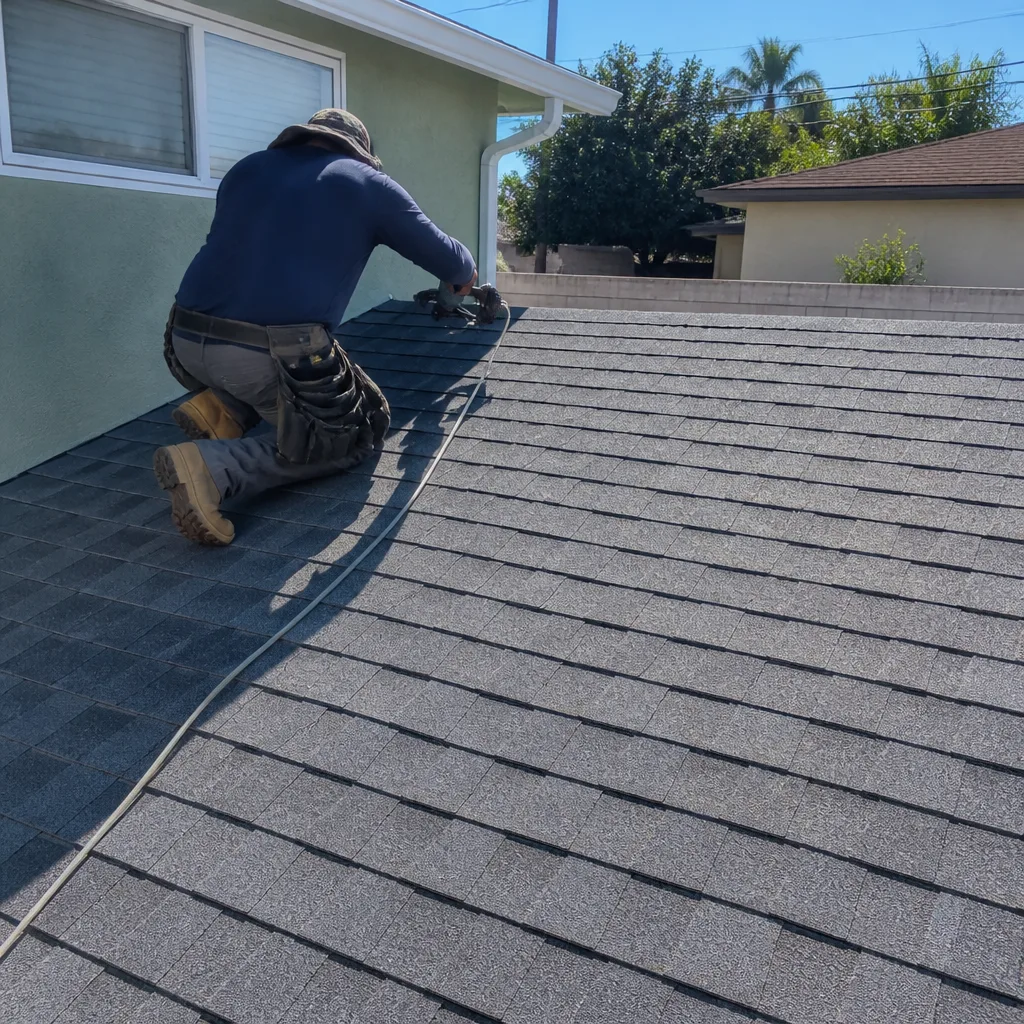
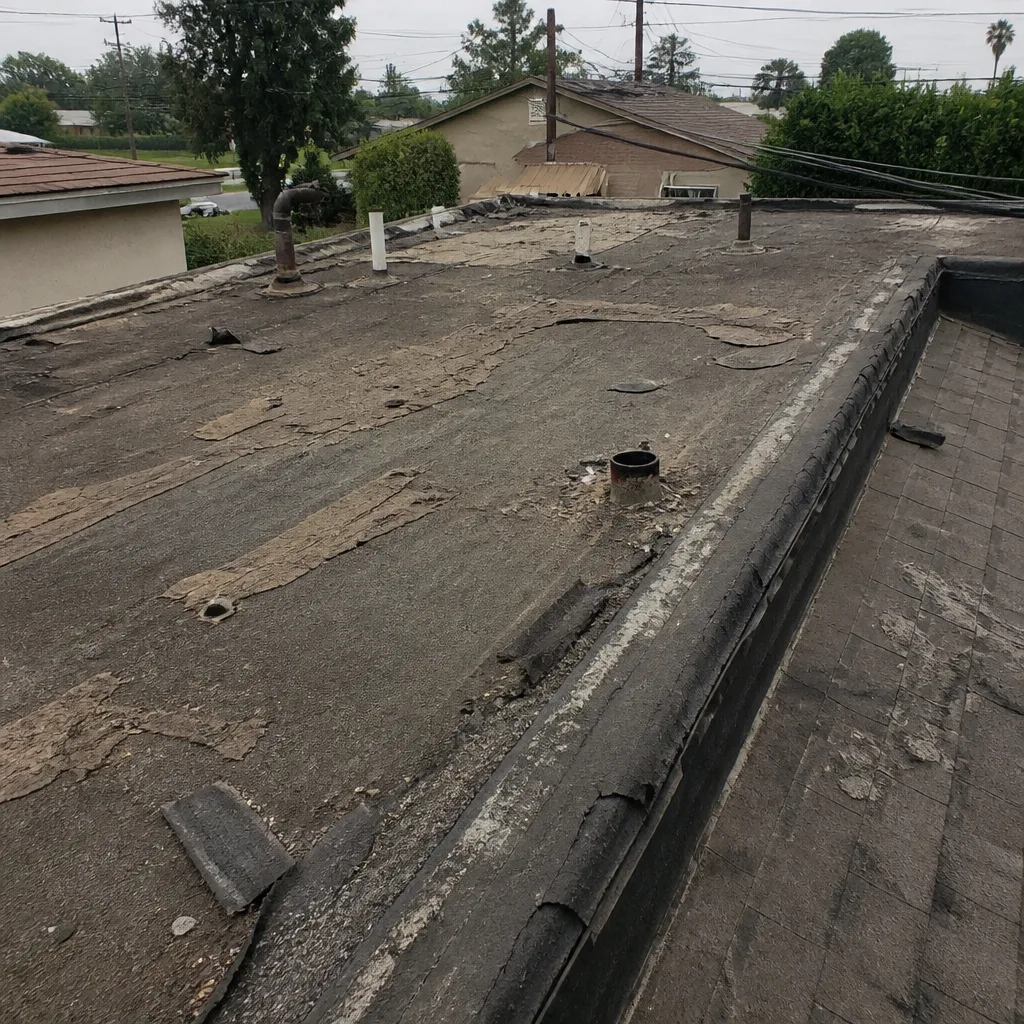
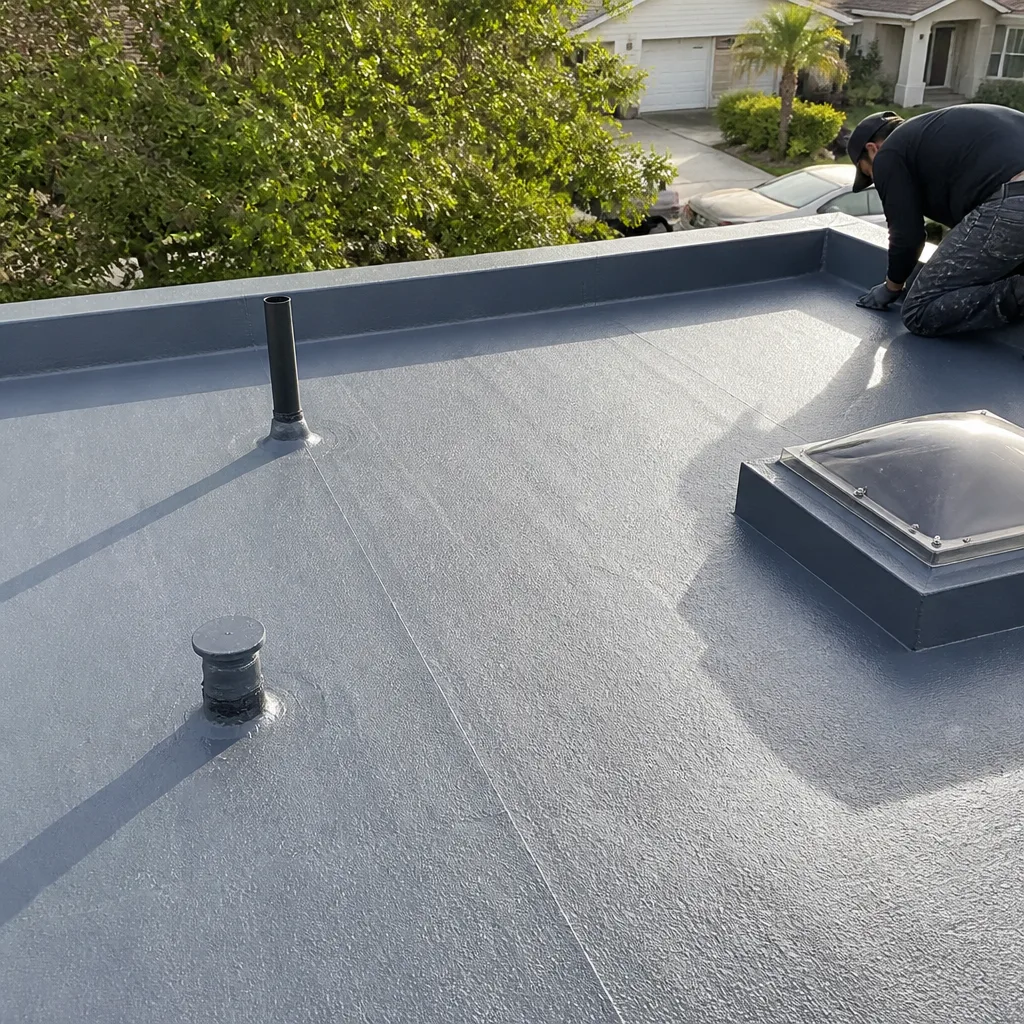
See the difference
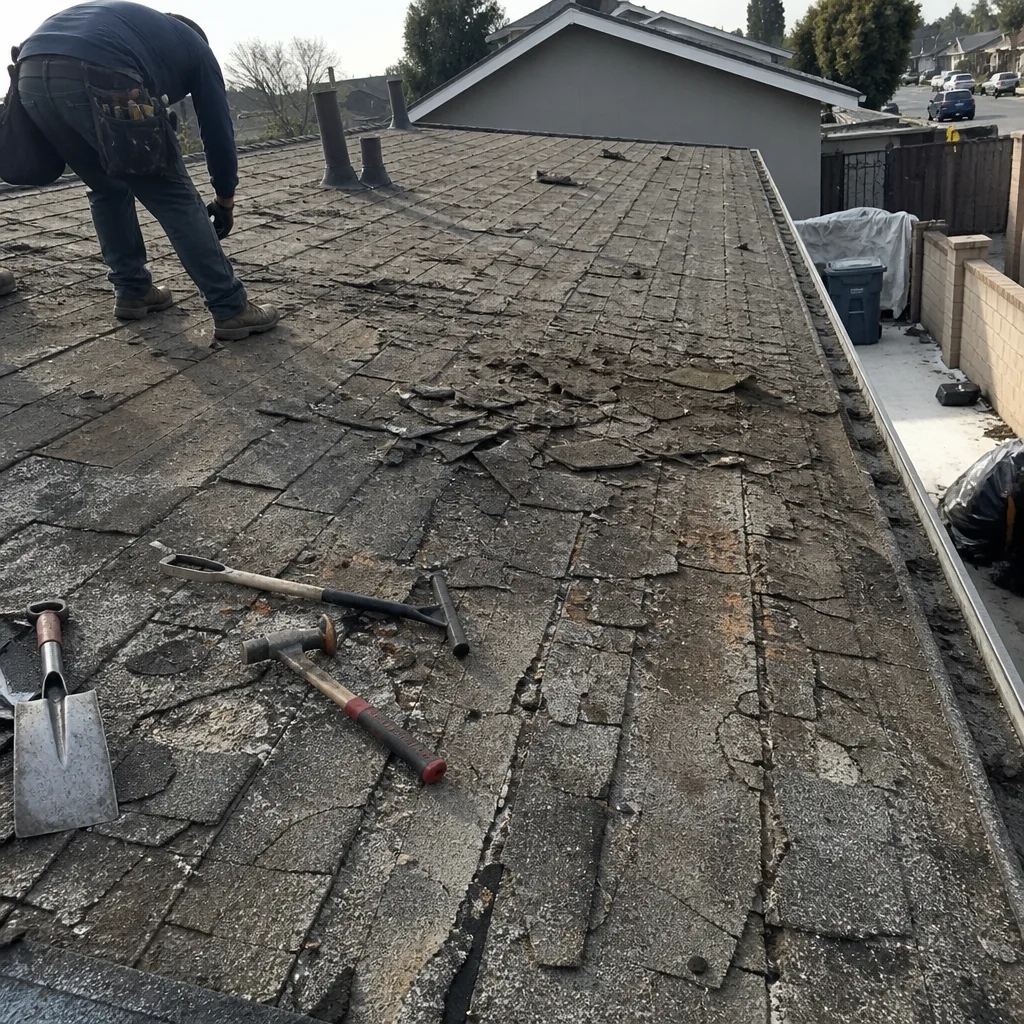 Before
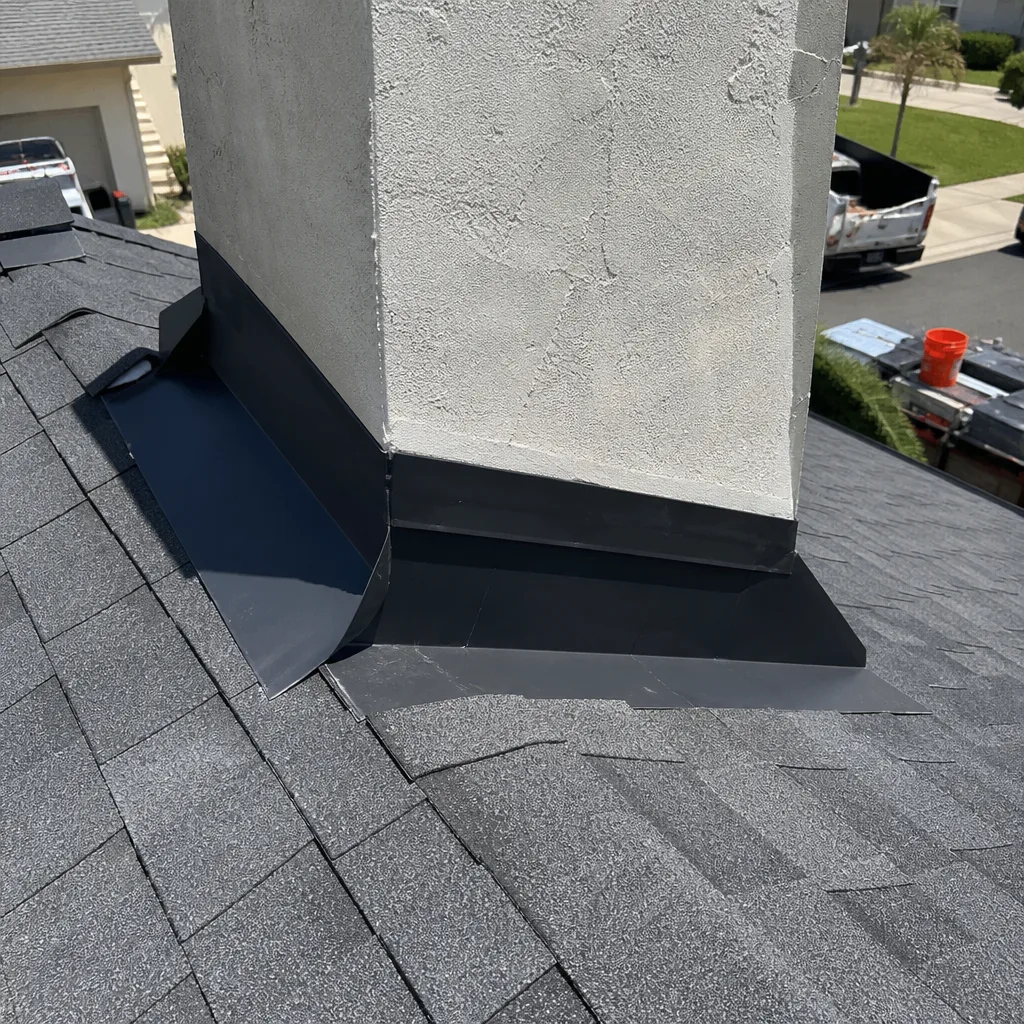 After
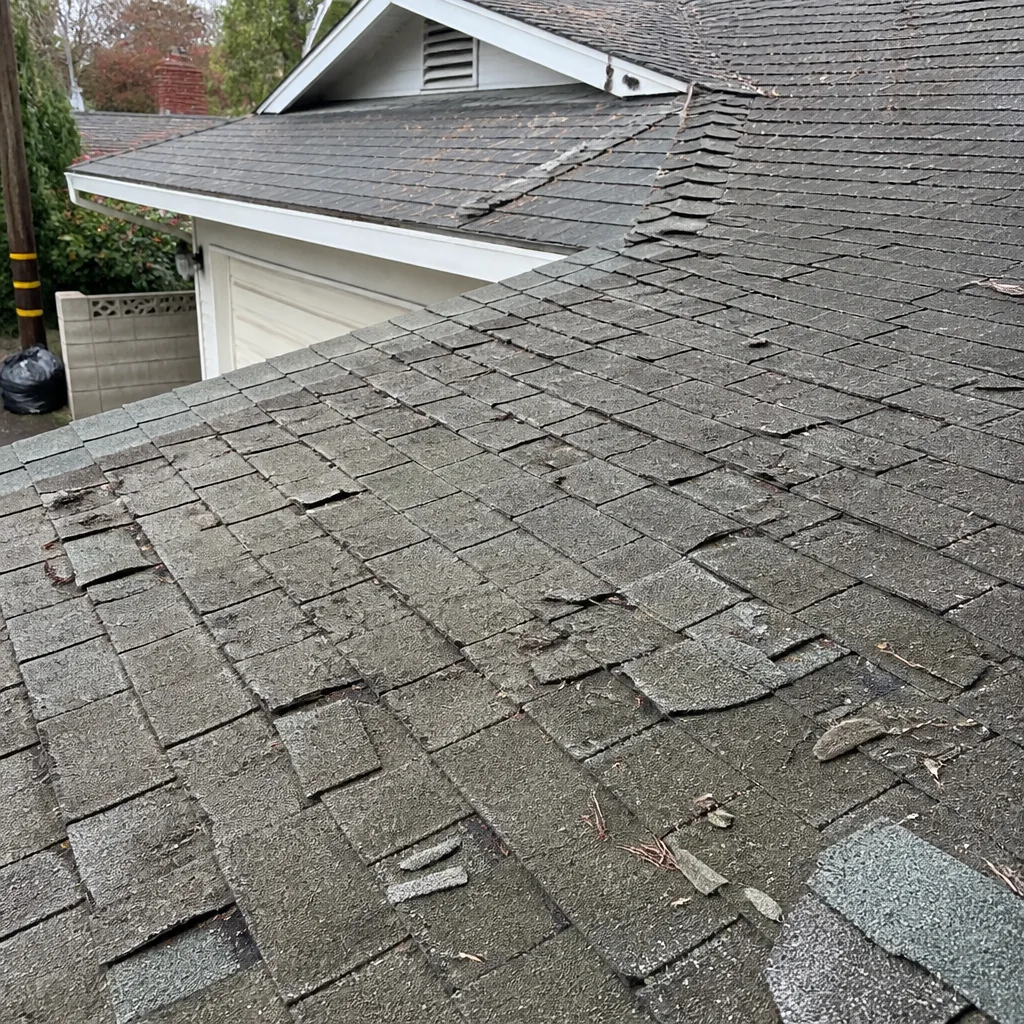 Before
 After
 Before
 After
When to Call a Professional
Some problems resolve with a clear diagnosis and a straightforward fix, and some require professional equipment, fall protection, and experience. Call a roofer when the leak source is elusive after an attic check, when you have multiple stains in different rooms, when roof access is steep or high, or when you suspect flashing failure at a chimney or dormer, because these repairs require working at heights where the risks are real and the consequences of a mistake are structural. Norwalk homeowners are welcome to start with a diagnostic inspection before committing to any repair. True North Roof Repair offers free estimates in Norwalk, and you can reach us at (866) 617-1004 to schedule one.
Frequently Asked Questions
Most targeted roof repairs in Norwalk, like a pipe boot replacement or a single flashing joint repair, typically run between $350 and $800 depending on accessibility and the extent of the failure. Larger repairs involving multiple flashing points or a valley rebuild can reach $2,000 to $4,000. Every job is different; the best way to get an accurate number is a diagnostic inspection that identifies the exact scope. Call (866) 617-1004 for a free estimate.
In most cases, no. The leak source is on the exterior roof surface, and interior patching, like sealing from inside the attic, almost always fails because water has already saturated the sheathing and will continue to enter through the nail holes and deck seams. A proper repair addresses the point of entry from the top side of the roof.
A well-installed architectural shingle roof in Norwalk typically lasts 20 to 25 years, though our sun exposure can reduce that by a few years on south-facing slopes. Three-tab shingles often age out at 15 to 20 years. The real determinant is installation quality, ventilation, and how quickly small problems get fixed, not just the shingle warranty.
An inspection is a diagnostic process that identifies the condition of the roof and the source of any problems. An estimate is a price for a defined scope of work. A good inspection precedes the estimate because the estimate’s accuracy depends on knowing the actual scope. We offer inspections as a standalone service in Norwalk specifically so homeowners can get clarity before committing to any repair or replacement.
Yes. We work with materials from GAF, CertainTeed, and Tamko, among others, which means the recommendation is driven by your budget, your home’s exposure, and the look you want, not by a single-brand contract that locks you in.
Our quotes are written line items based on the confirmed scope from the inspection. The price changes only if the work reveals damage that was genuinely impossible to see before the job began, and we document and show you that damage before proceeding. What we don’t do is quote low and pile on change orders as standard practice.
The Bottom Line
Roof problems are rarely what they look like from the ceiling. The stain is downstream; the failure is upstream, and finding the source requires reading the evidence, from the attic down or from the roofline back. Norwalk’s climate means shingles and sealants age in predictable ways, and the three components that fail first, pipe boots, step flashing, and valley seams, are almost never the ones homeowners check first. Before you spend a penny on repair or replacement, know exactly where you stand. Start with a diagnostic inspection, confirm the scope, and make your decision from information rather than guesswork. If you’re in Norwalk and want a clear-eyed read on your roof, we’re glad to help. Explore more guides & resources to stay informed about your home.
Written by the team at True North Roof Repair home, serving Norwalk since 2016.