Last updated October 31, 2026
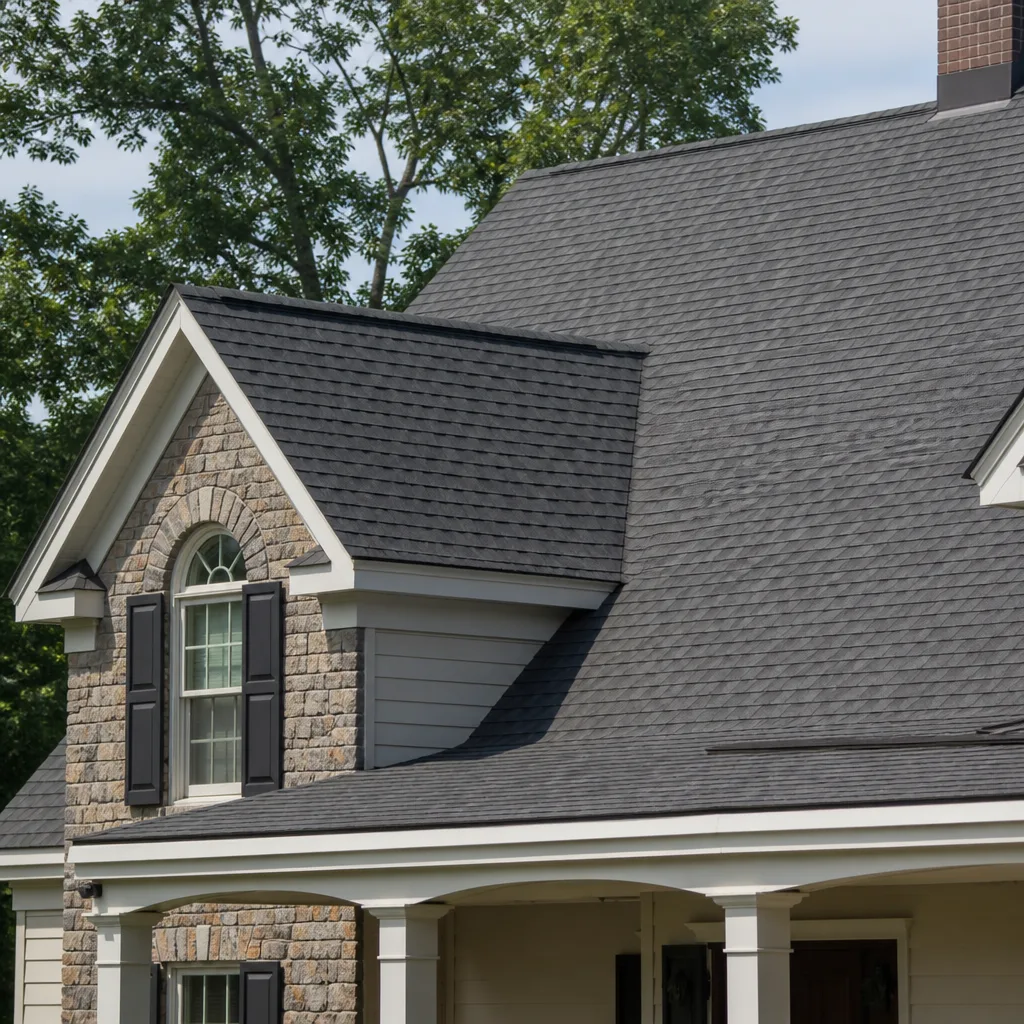 Architectural shingles
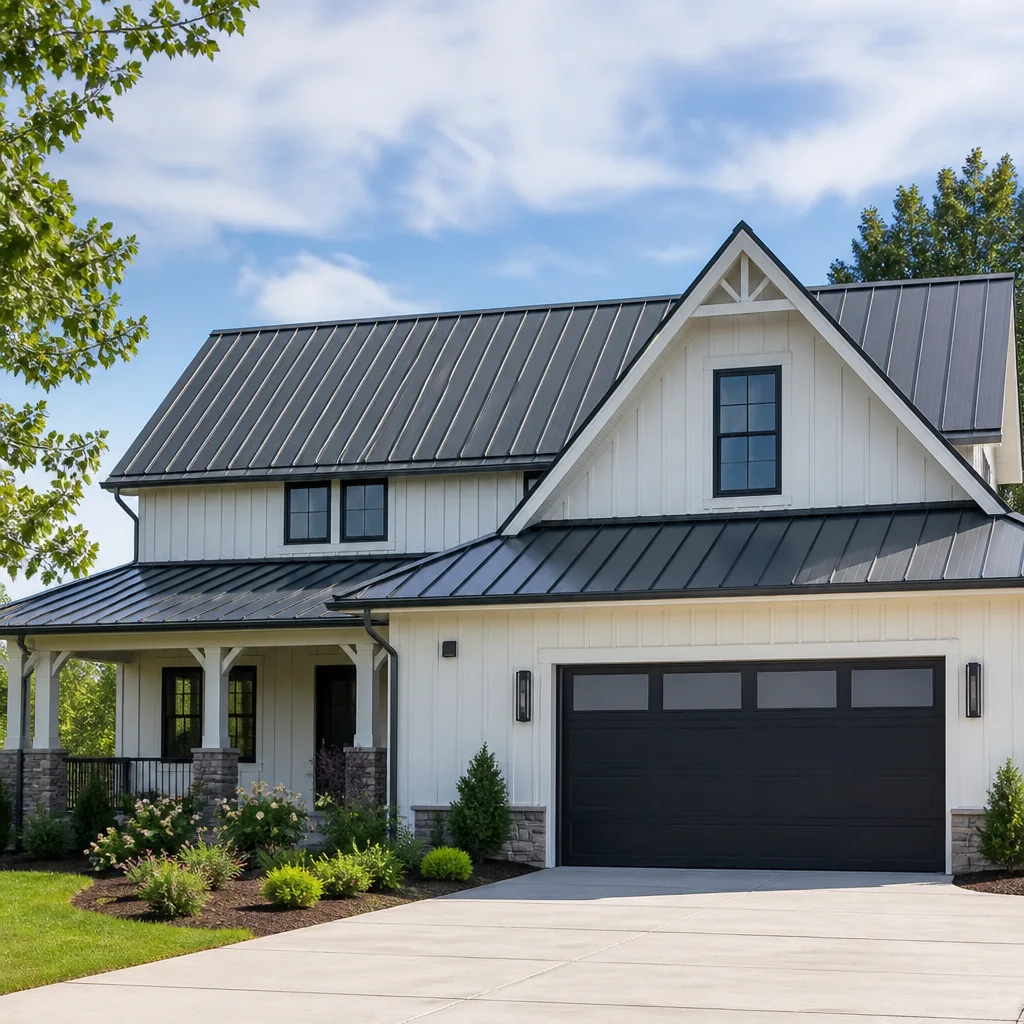 Metal roofing
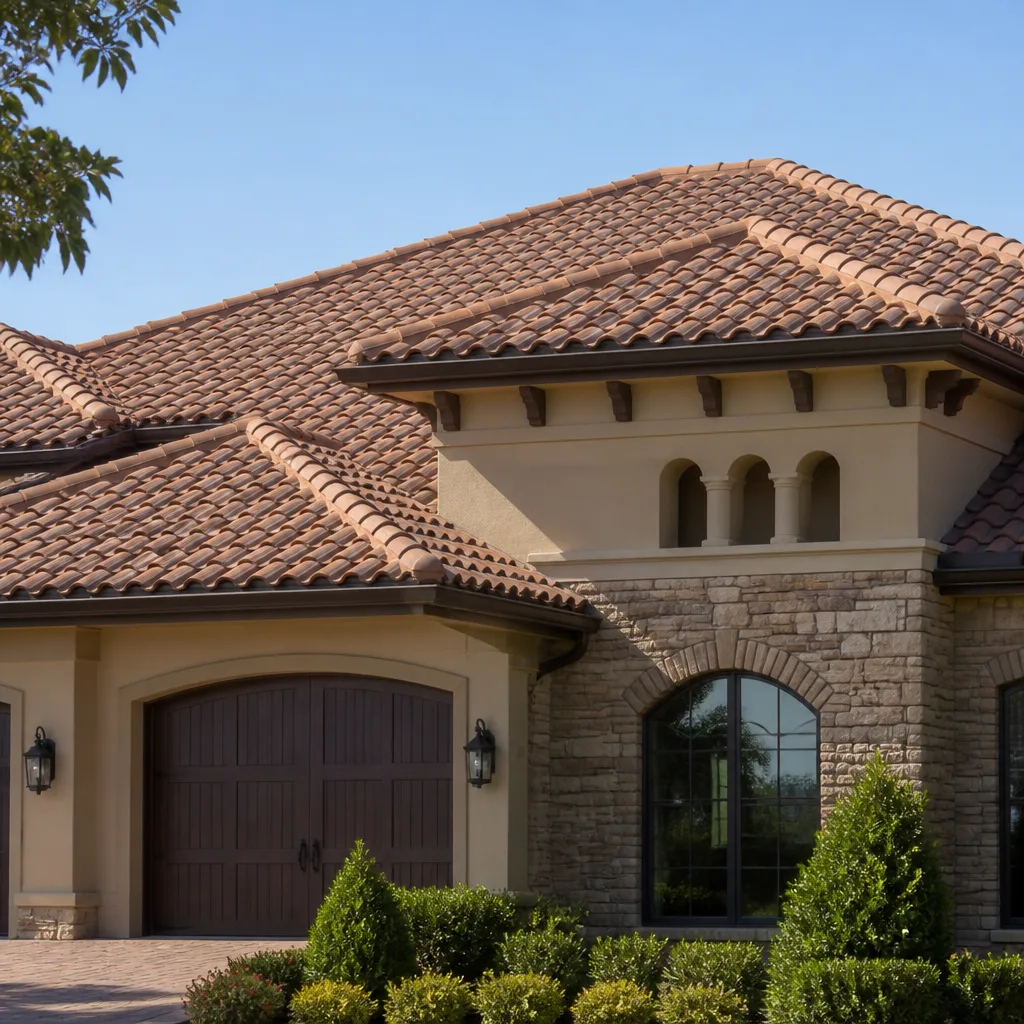 Tile roofing
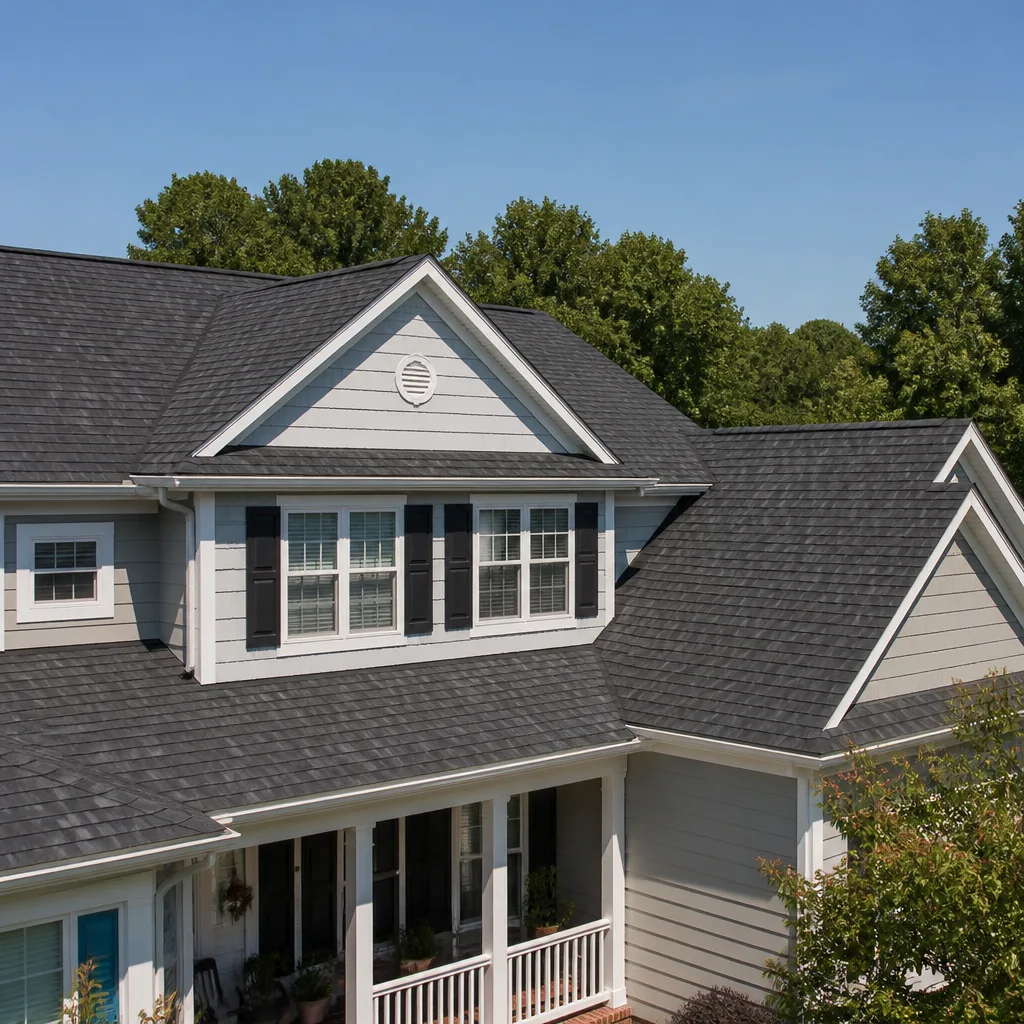 GAF
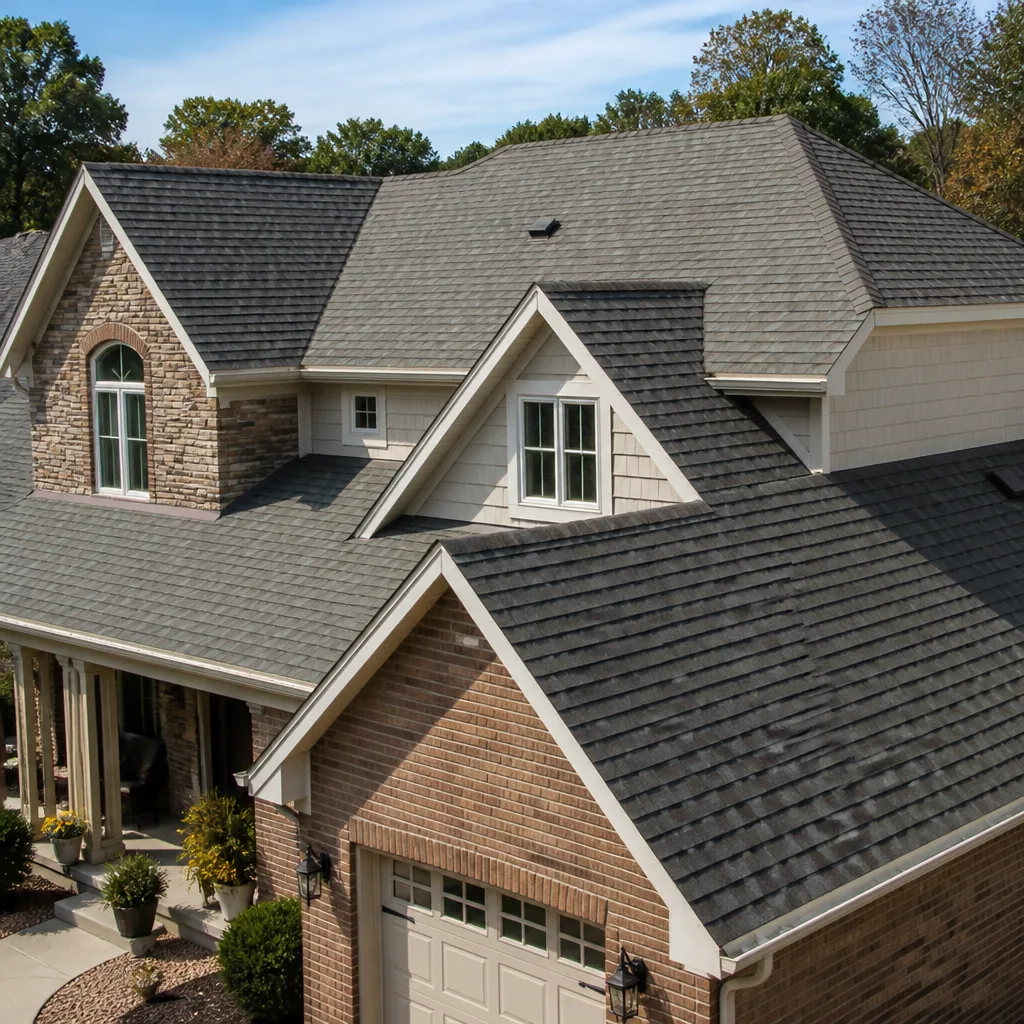 Owens Corning
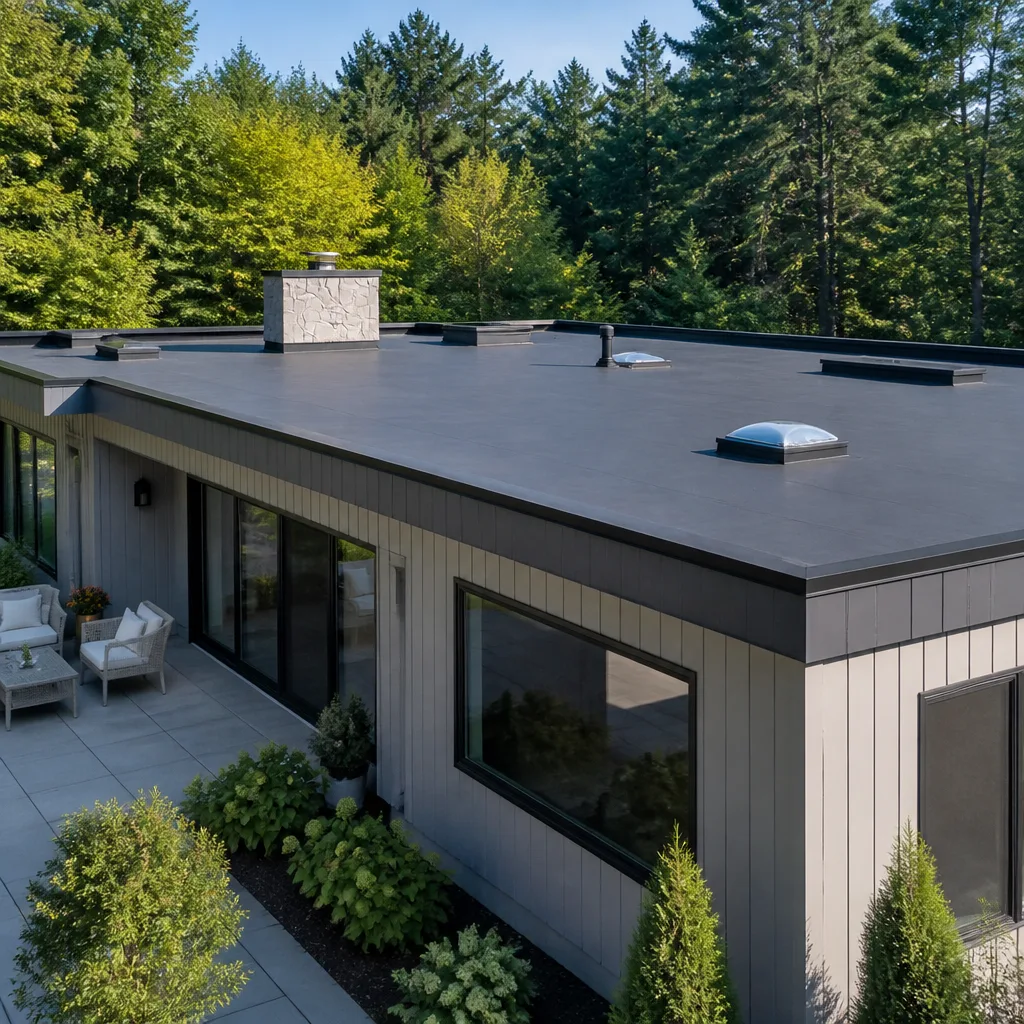 Flat & low-slope
Free roof inspection with deck photos before we talk money - GAF and Owens Corning certified installation
Roof Repair Maintenance Checklist for Norwalk Homeowners
Most roof maintenance advice you’ll find online was written for places with snow, ice dams, and four distinct seasons. Norwalk gets roughly 13 inches of rain a year and nearly 300 days of sun. The number one maintenance task most Norwalk homeowners skip isn’t gutter cleaning – it’s checking attic ventilation, which in Southern California’s heat drives shingle aging faster than rain ever could. Heat is the primary roof killer here, and most checklists never mention it. This guide covers what actually degrades roofs in a dry, UV-intense, wind-periodic environment, with specific inspection points for Santa Ana season, low-slope roofs, and the documentation habits that make repair versus replacement decisions honest instead of guesswork.
Styles & brands we work with
Quick Answer
A proper roof maintenance checklist for Norwalk homeowners prioritizes UV and heat-exposure inspection, attic ventilation verification, and Santa Ana wind season preparation over the rain-focused advice in generic guides. We recommend a visual roof inspection twice yearly (spring and late fall) plus an attic ventilation check each summer before peak heat arrives. The tasks that matter most are checking for granule loss on sun-facing slopes, confirming soffit and ridge vents remain unobstructed, and documenting every finding with photos and notes so a roofing specialist can give you an accurate repair-versus-replacement assessment without starting from scratch.
Table of Contents
- UV and Thermal Cycling: The Real Roof Stressors in Norwalk
- Attic Ventilation: The Inspection Most Homeowners Skip
- Santa Ana Season Prep: A Pre-Event Checklist
- Flat and Low-Slope Roof Maintenance in Norwalk
- What to Document After Every Inspection
- A Season-by-Season Maintenance Schedule for Norwalk
- Repair vs. Replacement: How Your Maintenance Records Decide
- Common Mistakes to Avoid
- When to Call a Professional
- Frequently Asked Questions
- The Bottom Line
UV and Thermal Cycling: The Real Roof Stressors in Norwalk
Norwalk’s climate doesn’t beat roofs up with rain. It bakes them. The sun here delivers intense ultraviolet exposure year-round, and asphalt shingles absorb that radiation directly. UV breaks down the asphalt compounds that hold shingle granules in place. When granules release, the underlying asphalt loses its protection and degrades faster. That’s why sun-facing roof slopes in Norwalk – typically the south and west exposures – often show visible wear years before shaded slopes do, even on the same roof.
Thermal cycling compounds the problem. Roof surfaces in Norwalk can swing 60 degrees or more between midday heat and overnight cool-down. Those daily expansion and contraction cycles stress shingle seals, flashing joints, and fasteners. Over years, the repeated movement loosens materials that never see a drop of rain. A roof can look dry and intact from the ground while its south slope is quietly losing granules and its shingle seals are losing adhesion.
What to Check:
- Granule loss on sun-facing slopes. Check gutters and downspout elbows for accumulated granules, and look for shingles where the surface appears smooth or glossy rather than textured. Runoff after a rain carries granules into gutters – if you see a heavy coating, your shingles are shedding faster than normal.
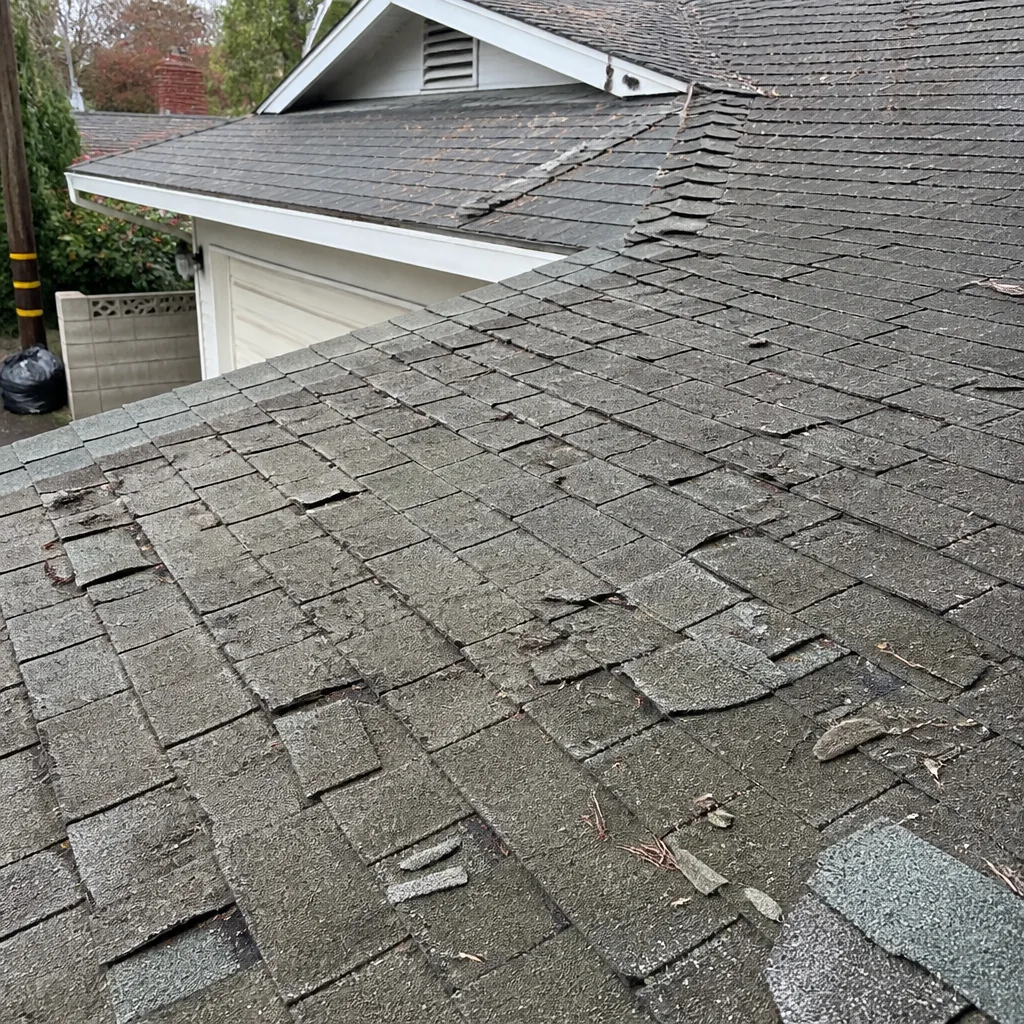
- Shingle curling or cupping. Heat causes the asphalt layer to shrink. On older roofs, shingle edges begin lifting at corners. Curling shingles catch wind, and once they lift, they become tear-off points during Santa Ana gusts.
- Brittle shingles. UV exposure makes shingles rigid. They crack instead of flex. If walking a roof (or watching a professional do it) produces snapping sounds, the shingle mat is brittle and the roof is near the end of its useful life.
- Flashing sealant deterioration. The caulk and sealant around chimneys, vents, and skylights hardens and cracks under sustained UV. Check for white, chalky sealant pulling away from joints. This is a primary leak point even when no rain has fallen recently.
We’ve inspected Norwalk roofs where the north slope looked nearly new and the south slope was granule-bare and cracking. Homeowners who only look up from the street miss this entirely. The fix isn’t always replacement, but it is always better addressed before a wind event turns a weakened shingle into a missing one.
Attic Ventilation: The Inspection Most Homeowners Skip
Here’s the counterintuitive part. The roof’s biggest enemy in Norwalk isn’t on top of the house. It’s inside. An under-ventilated attic traps heat, and trapped attic heat bakes shingles from below. A dark asphalt shingle roof on a 95-degree Norwalk day can reach surface temperatures above 160 degrees. If the attic below isn’t venting, that heat radiates upward through the decking, cooking the shingle’s underside while the sun cooks the top. Shingles age from both directions simultaneously.
Proper attic ventilation moves that heat out. Soffit vents pull cooler air in at the eaves; ridge or box vents release hot air at the peak. When the system works, shingles run cooler and last closer to their rated lifespan. When it doesn’t, you’ll see premature granule loss and curling concentrated on the hottest slope – even if the attic looks fine from the access hatch.
How to Check Attic Ventilation:
- Count and inspect your vents. From outside, verify soffit vents exist and aren’t painted over, blocked by insulation, or caked with dust. Check that ridge vents, turbine vents, or box vents are present and unobstructed.
- Compare attic temperature to outside temperature. On a warm afternoon, the attic should be no more than 10-20 degrees hotter than exterior air. If your attic feels dramatically hotter than the outside, airflow is insufficient.
- Look for signs of trapped heat. Rusted nail heads poking through the decking (staining the underside of the roof sheathing), warped plywood, and excessive heat radiating downward into living space are all indicators.
- Check insulation placement. Blown-in insulation frequently migrates against the eaves, blocking soffit intake vents. Baffles should keep insulation clear. If you can’t see daylight at the eaves from inside the attic, intake is compromised.
- Listen for airflow. On a windy day, a properly vented attic has perceptible air movement. Complete stillness on a breezy afternoon suggests a blocked system.
In our experience, at least half of the premature roof aging we see in Norwalk stems from attic ventilation problems rather than material defects. It’s the cheapest fix with the biggest lifespan return, and it’s the first thing we check during a Roof Inspection in Norwalk.
Santa Ana Season Prep: A Pre-Event Checklist
Santa Ana winds are the single most destructive weather event for roofs in Norwalk. They arrive fast, gust 40-70 mph, and hit when everything is bone dry. Shingles that survived a wet winter tear off in October winds because the sealing strips lost adhesion during the hot, dry summer. The time to prepare is September and early October – not the morning the wind starts blowing.
This pre-event checklist should be worked through every autumn. It takes about an hour and catches the failures that turn loose shingles into full wind-damage claims.
- Re-secure loose or lifted shingles. Walk the perimeter (or have a professional do it) looking for any shingle edge that lifts with finger pressure. A shingle you can lift by hand will lift in a 50-mph gust. These need adhesive re-sealing before wind season.
- Inspect ridge caps. Ridge cap shingles take the full force of wind across the peak. Check every cap for cracking, lifting, or missing granules. Loose ridge caps are the most common Santa Ana casualty we see.
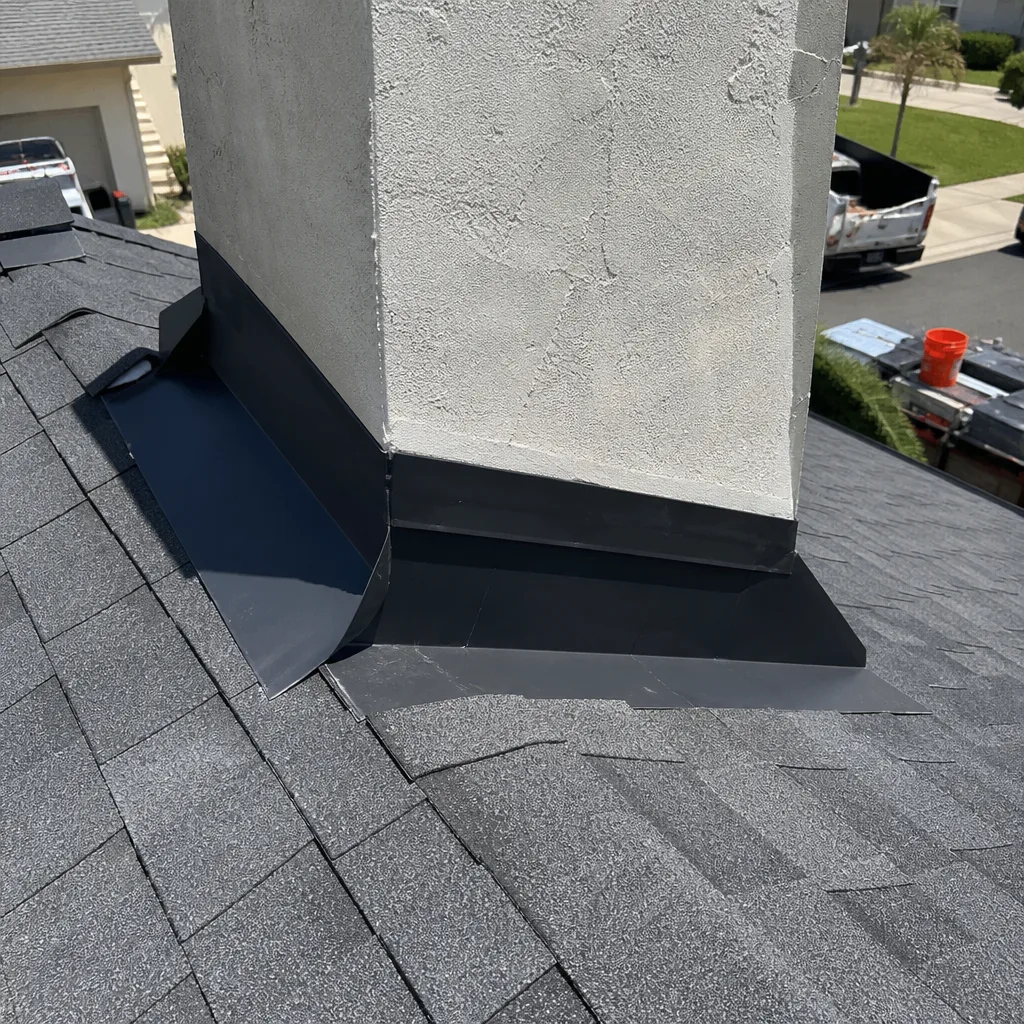
- Check all flashing and sealant. Dry winds find every lifted piece of flashing. Pipe boots, chimney flashing, and valley metal should be tight. Press on sealant – if it’s brittle or cracked, it needs re-caulking.
- Clear all debris. Palm fronds, branches, and loose objects on the roof become wind-driven projectiles during Santa Ana events. A palm frond scraping across shingles at 60 mph can tear the roof surface. Clear everything off the roof and secure patio furniture below.
- Trim overhanging branches. Tree limbs within reach of the roof will slam against shingles and flashing throughout the wind event. Cut them back at least three feet from the roof edge.
- Confirm gutters are secure. Loose gutters tear away and take fascia board and shingle edges with them. Tighten loose hangers and clear any clogged outlets that add wind load.
After Santa Ana events, do a quick visual check from the ground and from inside the attic for new daylight gaps or debris deposition. Damaged shingles found early are a repair. Damaged shingles left for the next rain become a leak, and a leak in Norwalk means interior damage to drywall, insulation, and possibly electrical fixtures.
Flat and Low-Slope Roof Maintenance in Norwalk
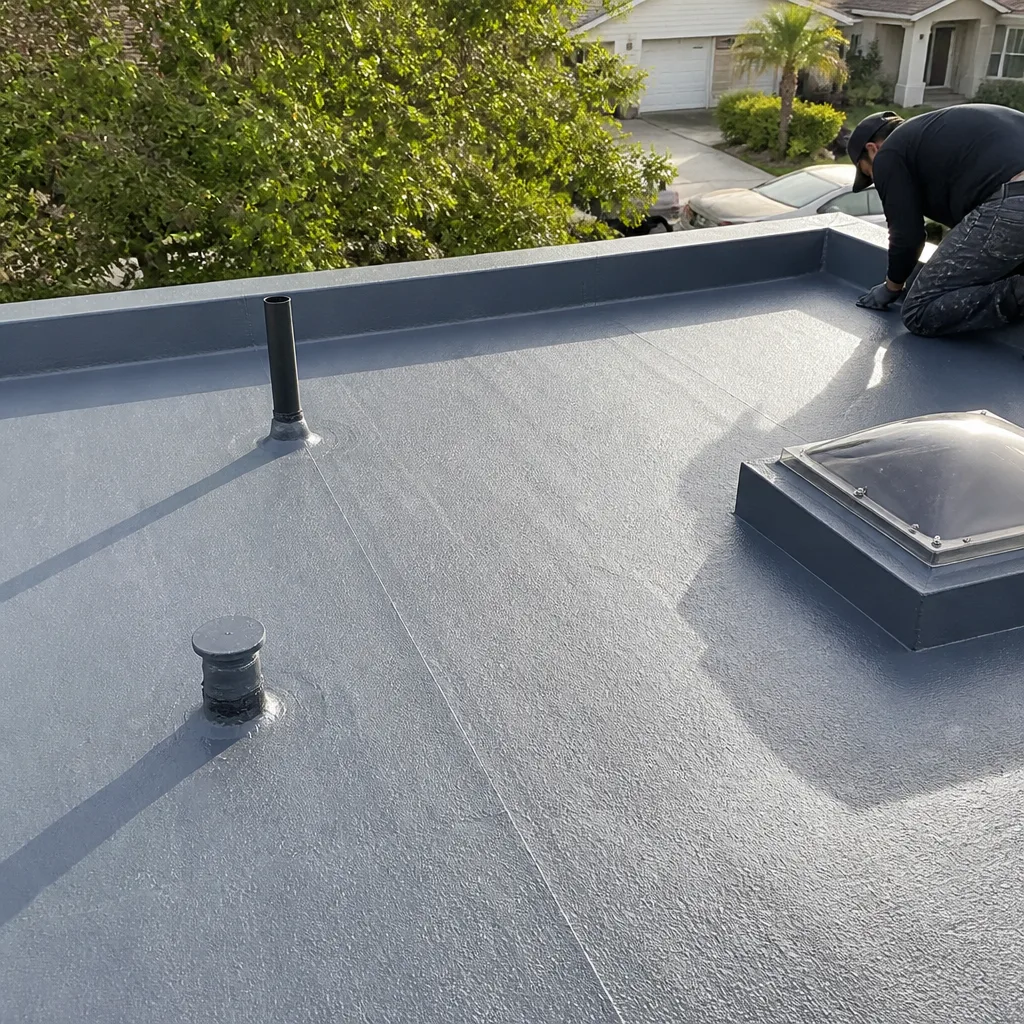
Norwalk has thousands of homes with flat roofs and low-slope roof sections – porch overhangs, patio covers, garage roofs, and mid-century residential designs. Standard pitched-roof checklists skip these entirely. Flat roofs fail differently. They don’t shed water by gravity; they hold it until evaporation removes it. In Norwalk’s climate, that means standing water sits on the membrane under intense UV, degrading the surface even when it never penetrates.
Mod-bit, built-up, and single-ply membranes (TPO, PVC) all require different maintenance attention than shingles. The checklist below applies to any flat or near-flat roof surface on a Norwalk home.
Flat and Low-Slope Roof Tasks:
- Check for ponding water. After any rain, look for water that remains standing 48 hours later. Ponding water acts as a magnifying lens for UV and accelerates membrane degradation in that exact spot. Persistent ponding indicates a sagging deck or insufficient slope and needs professional assessment.
- Inspect membrane seams. Heat and UV break down seam adhesives on single-ply roofs. Look for lifted seams, bubbles, or delamination at the overlap. Seams are always the first failure point.
- Examine flashings and penetrations. Flat roofs concentrate all penetrations – plumbing vents, HVAC curbs, skylights – in a small area. Every one is a potential leak. Inspect the sealant and fasteners at each penetration twice yearly.
- Clear the drains and scuppers. Flat roofs depend on drains to move water off. Blocked drains create artificial ponding even on a correctly sloped roof. Clear leaves, debris, and roof gravel from every drain and scupper opening.
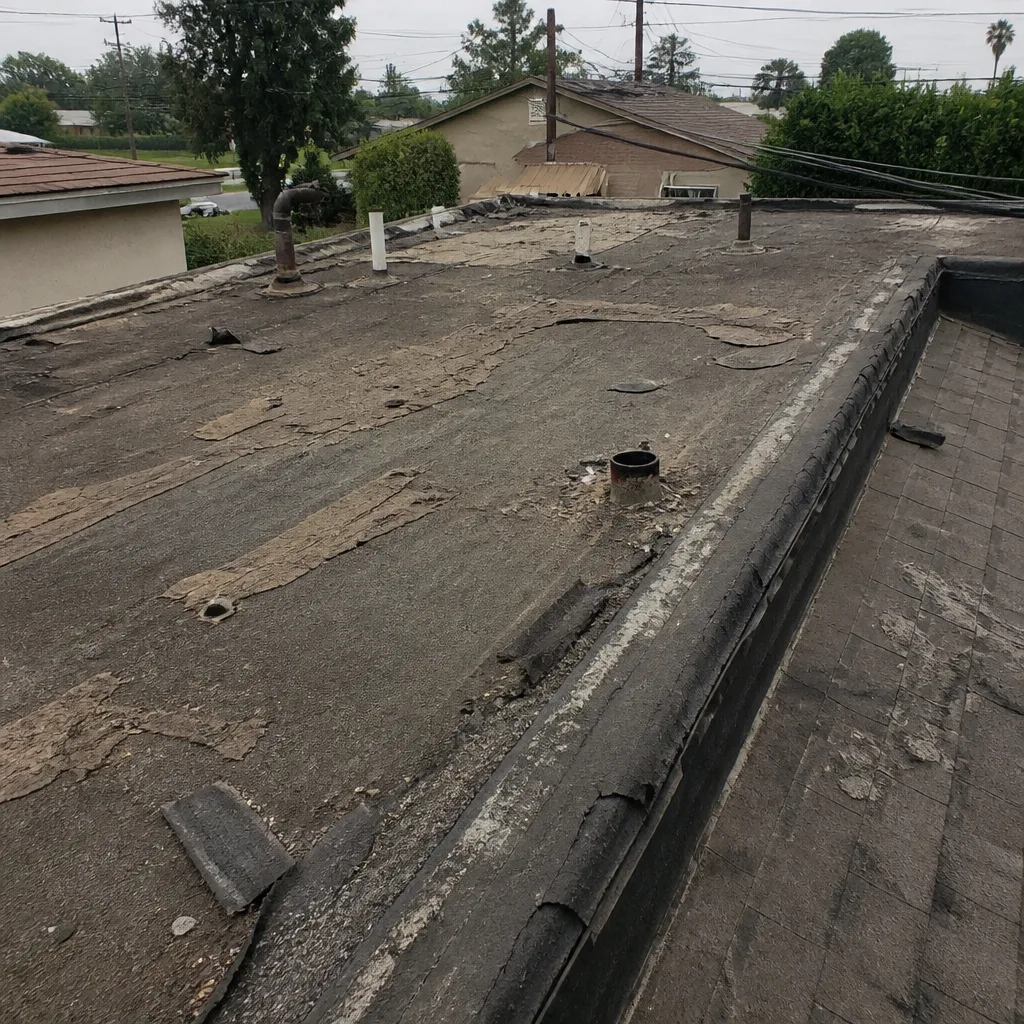
- Check surface condition. On mod-bit roofs, look for alligator cracking (a pattern of fine cracks that resembles reptile skin) on the top surface. On built-up roofs, look for exposed asphalt or missing gravel. On single-ply, look for punctures and shrinkage pulling flashings.
- Look for UV degradation on coating systems. Many Norwalk flat roofs have reflective coatings. These fade and chalk over time. Once the coating breaks down, the membrane beneath absorbs full UV. Re-coating before the membrane is exposed extends flat roof life significantly.
Flat roof maintenance doesn’t get the same attention as pitched roof work because the damage is invisible from the street. But a neglected low-slope roof over a patio or garage can leak into the structure just as thoroughly as a main roof – and because flat roofs fail at seams and drains first, catching a lifted seam or blocked scupper is often the difference between a $400 repair and a $4,000 re-roof.
If your home has significant flat roof area, those sections should be evaluated with the same rigor as the pitched sections during any Roof Repair in Norwalk consultation. Repair-first is the right approach for most membrane issues caught early.
What to Document After Every Inspection
Here’s the practice that separates homeowners who get honest repair-versus-replacement recommendations from those who get sold a full replacement: keeping a running roof file. A contractor who arrives at a house with no history can only see the roof’s current condition. A contractor who sees documentation spanning two or three years can identify the rate of deterioration, the specific weak points, and whether the failure pattern points to a single repairable area or a roof-wide condition.
This is not about becoming a roofing expert. It’s about building a record that lets a specialist see what you’ve seen.
What to Document:
- Photographs, every time. Take exterior photos of all four roof exposures, close-ups of any suspect area, and interior attic photos of the decking underside. Same angles each inspection make comparison straightforward.
- Granule loss measurements. After each rain, note how much granular material accumulates in gutters. A light sprinkling is normal for any shingle roof. Heavy buildup that increases inspection over inspection indicates accelerating UV degradation.
- Specific defect notes. “South slope above bedroom has 3 curling shingles near the eave, right side” is a useful note. “Roof looks old” is not. Note exact locations and what you observed.
- Dates of any severe weather. Record the dates of Santa Ana wind events, unusual hailstorms, or the rare heavy downpour. A subsequent spike in attic staining becomes attributable to a specific event.
- Any contractor work performed. Keep bills, permits, and warranty paperwork. A prior repair’s paperwork tells a new inspector what was done, what material was used, and whether the current problem is a recurrence of a previous issue.
- Interior ceiling and attic stains. Photograph any new water stains when they first appear, with a date. The size and growth pattern over weeks tells a roofing specialist where water entered and how quickly it’s moving.
When a homeowner hands us a folder with two years of photos and notes, we can give a materially more accurate assessment than one who says “the roof seems fine, I guess.” The documentation isn’t for us – it’s for the homeowner to make decisions with confidence. It’s the difference between a guess and a diagnosis.
We lay out the options; you choose the path. Good documentation makes those options clearer and narrower.
A Season-by-Season Maintenance Schedule for Norwalk
Norwalk’s calendar doesn’t align with the generic spring/fall checklists in most roofing guides. The practical schedule below is weighted toward our actual climate: dry summers that bake roofs, autumn winds that tear them, winter rains that test them, and spring that reveals what the winter found.
Late Spring (May – June): Pre-Heat Inspection
Before the hottest months arrive, verify the attic ventilation system is functioning. Check soffit intake and ridge outflow. Look for any curling shingles that appeared during the previous year’s heat. Clear any accumulated debris from gutters and downspouts. This is also the right time to have any suspected granule loss evaluated – before summer heat accelerates it further.
Late Summer (August – September): Peak Heat Assessment
In August, step into the attic on a warm afternoon. If the heat is oppressive, ventilation needs attention. Check sun-facing slopes for visible granule loss. Begin wind-season preparations if you haven’t already. The goal is to identify weakened areas before Santa Ana winds arrive.
Early Autumn (September – October): Santa Ana Preparation
Run the full Santa Ana pre-event checklist from this guide: reseal lifted shingles, inspect ridge caps, clear debris, trim branches, and secure gutters. This is the most important maintenance window of the year in Norwalk. Weathered shingles that survived last winter will fail in October winds if not addressed.
After Rain Events (November – March): Leak Verification
After each significant rain, inspect attic for new staining and interior ceilings for discoloration. Check flat roof drains cleared properly and ponding resolved within 48 hours. Document anything new. This winter check catches the leaks that wind-damaged roofs develop once moisture gets involved.
If any season’s inspection reveals something you can’t confidently assess, a Roof Inspection in Norwalk provides a professional baseline. The inspection is a standalone service, not a sales pitch – it gives you a professional diagnosis without an obligation to proceed with work.
Repair vs. Replacement: How Your Maintenance Records Decide
The question every Norwalk homeowner eventually faces: repair or replace? Here’s how the decision actually works when it’s done honestly.
A repair is the right call when damage is localized and the surrounding roof is sound. Loose flashing, a few wind-torn shingles, a blocked drain, or a failed sealant joint are repairs. The surrounding roof material matters more than the defect itself. A single torn shingle on a five-year-old roof is a repair. The same torn shingle on a 25-year-old roof with granule loss across multiple slopes is evidence of systemic aging – and replacing one shingle won’t address the condition of the other 3,000.
Replacement becomes economically sensible when the roof’s overall condition indicates multiple failure points across the surface. If granule loss, curling, and brittle shingles are widespread, if leaks have recurred in different locations, or if the roof has exceeded its expected service life given Norwalk’s UV intensity, then continued piecemeal repairs cost more per year than replacement would.
This is where your documentation matters most. A homeowner who can show us that granule loss was minimal last year and significantly worse this year has evidence of accelerating deterioration. A homeowner with no records is assessing the roof’s condition for the first time during the inspection. The first scenario allows an informed decision. The second often leads to uncertainty, and uncertainty leads to either premature replacement or deferred repairs that turn expensive.
A roofing specialist who installs Roof Replacement in Norwalk while also offering repair and inspection services – using multiple material brands – can give you an assessment without a bias toward selling the bigger job. When a contractor’s only profitable answer is replacement, every roof looks like it needs one. When a contractor can repair or replace, the recommendation follows the evidence. True North Roof Repair works with seven major material brands – GAF, CertainTeed, Owens Corning, IKO, Atlas, Tamko, and Boral – which means if replacement is the right call, the material choice fits your budget and the roof’s actual conditions rather than whichever single brand a contractor happens to carry.
Common Mistakes to Avoid
- Ignoring the attic entirely. More premature roof aging in Norwalk traces back to attic ventilation problems than any other single cause. A roof that bakes from below and above fails years early. Check ventilation every summer.
- Following generic four-season checklists. Advice written for Minnesota or New England prioritizes ice dams, snow load, and freeze-thaw cycles. None of those apply in Norwalk. Following that advice means spending effort on irrelevant tasks while skipping UV and Santa Ana prep that actually matter here.
- Waiting until wind season to check shingle adhesion. Once Santa Ana winds arrive, the window for preventive sealing has closed. A shingle that lifts in October needed attention in September.
- Assuming no rain means no problems. Norwalk roofs degrade from sun and heat more than water. A “dry” year can be the worst year for your roof. The absence of leaks doesn’t mean the roof is healthy.
- Skipping flat roof areas. Many homeowners inspect the main pitched roof and forget the flat patio cover or garage roof. Those membranes are aging under the same sun and failing at seams. Check them as carefully as the main roof.
- Letting a handyman “fix” roof issues repeatedly. Caulk over cracked caulk, new sealant over separated flashing, and shingles nailed through expired material accumulate into a patchwork that hides the real problem. If an area needs the same fix twice, a specialist should assess the underlying cause.
- Not documenting anything. Memory is not a maintenance record. Photos, dates, and notes turn a vague sense that “the roof might be getting old” into a precise record that supports an accurate repair-or-replace decision.
When to Call a Professional
Some maintenance tasks are safe and sensible for homeowners: clearing debris, checking gutters, observing attic conditions. Others need a roofing specialist. If you see active water intrusion, multiple shifted or missing shingles, daylight visible through the roof decking from inside the attic, or significant shingle granule loss across large areas, those conditions demand professional assessment. High-slope work, any task requiring walking on the roof surface, and Santa Ana damage assessment should not be DIY. Roof falls cause serious injuries, and walking on brittle or damaged shingles makes the problem worse. True North Roof Repair offers free estimates in Norwalk – call (866) 617-1004 to schedule an assessment. We diagnose first, spending second.
Frequently Asked Questions
We recommend twice yearly visual inspections – once in late spring before peak heat and once in early autumn before Santa Ana season – plus an attic ventilation check each August. Homes with significant flat roof area should check drains and seams after each rain. If you’re not comfortable doing it yourself, a professional Roof Inspection in Norwalk can establish a baseline and identify issues early.
Minor roof repairs in Norwalk – flashings, sealant work, single shingle replacement – typically run from $250 to $700 depending on accessibility and material. Wind-damage repairs that involve multiple shingles or ridge caps frequently land in the $600 to $1,500 range. Larger repairs affecting decking or underlayment start around $1,500 and go up based on scope. These are approximate ranges; your exact quote depends on what the inspection finds. Call (866) 617-1004 for a free estimate based on your roof’s actual condition.
Norwalk’s intense UV exposure typically reduces asphalt shingle lifespan by 10-20% compared to cooler climates. A 30-year architectural shingle may realistically last 22-27 years here; a 25-year three-tab shingle often lasts 18-22 years. Attic ventilation quality, roof slope orientation, and maintenance consistency shift these numbers significantly. A well-ventilated north-facing roof can outperform a poorly-ventilated south-facing roof by five years or more.
Not necessarily. Light granule loss is normal and expected, especially on roofs over 10 years old. Heavy granule loss concentrated on sun-facing slopes, or loss that accelerates noticeably year over year, indicates advanced UV degradation that may warrant replacement. The determining factors are the roof’s age, the extent of granule loss across the surface, and whether shingles are also curling or cracking. A professional inspection can tell you whether the condition is an isolated issue or systemic aging.
Yes. Light-colored or reflective materials handle Norwalk’s UV intensity better than dark asphalt shingles. CertainTeed’s solar-reflective shingle lines, Owens Corning’s cool roof options, and Boral’s tile products all perform differently under sustained sun. Multi-brand access means you can choose material based on climate performance rather than what a single-brand contractor stocks. Call (866) 617-1004 to discuss your material options and get a free estimate.
Yes, with important caveats. Ground-level visual inspection from all four sides with binoculars is safe and worthwhile. Attic inspection from the access hatch or safe walking surface is appropriate. Do not walk the roof surface unless you have proper safety equipment and the roof has a walkable pitch. Damaged or brittle shingles break further underfoot, and falls from even single-story roofs cause serious injury. If your inspection turns up concerns, a professional assessment confirms what you’re seeing without putting you at risk.
The Bottom Line
Norwalk roofs fail from sun, heat, and wind – not rain. The maintenance that matters here is ventilation checking, UV damage monitoring, and Santa Ana preparation. Skip the generic checklist. Work the Norwalk-specific one: verify attic airflow every summer, document what you see every inspection, run the full Santa Ana prep each September, and don’t forget flat roof areas. A roof that gets consistent attention and honest documentation lasts longer, repairs cost less, and replacement decisions get made from evidence instead of sales pressure. When you need a professional assessment, call True North Roof Repair at (866) 617-1004. We’ll inspect, explain what we found in plain language, and recommend only what the roof actually needs.
Written by the team at True North Roof Repair, serving Norwalk since 2016.
See the difference
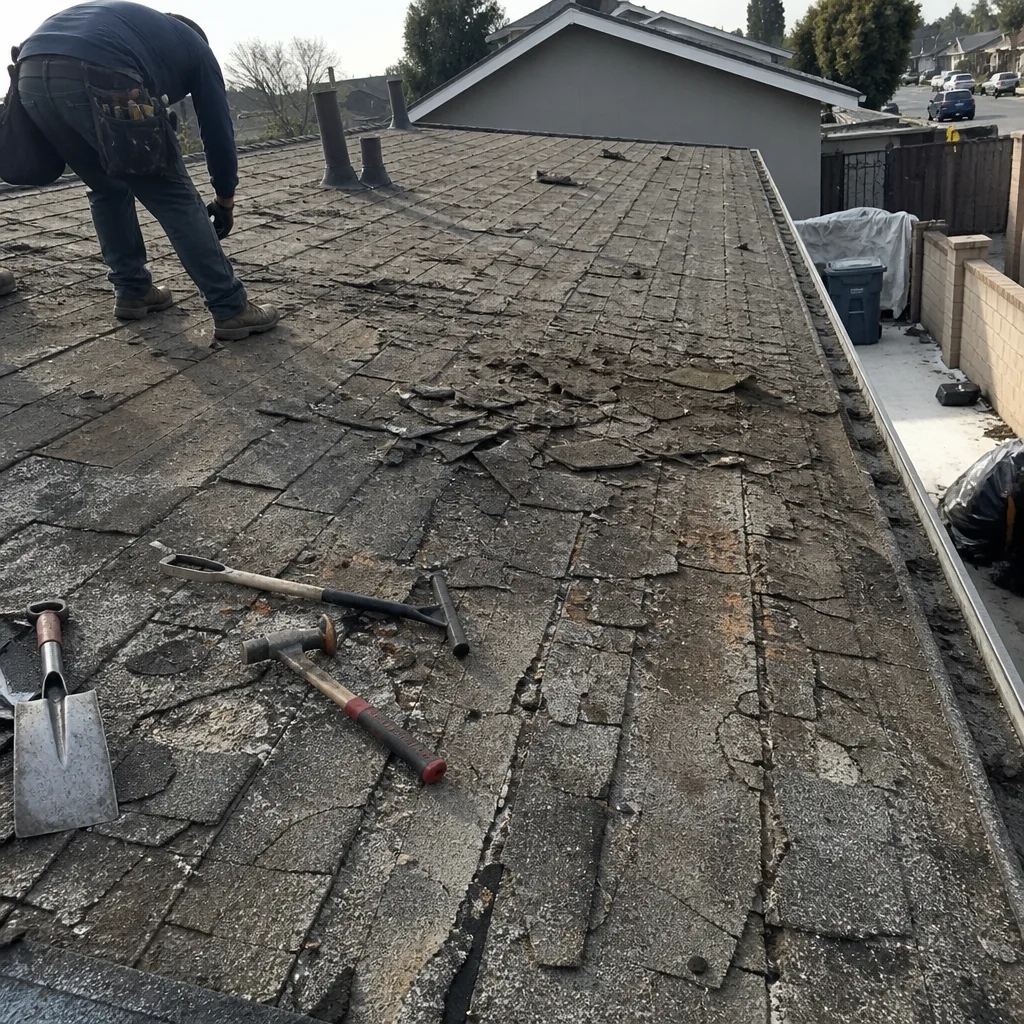 Before
 After
 Before
 After
 Before
 After